
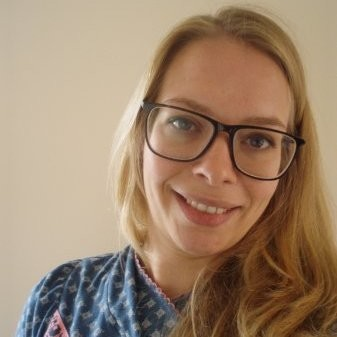
Discuss your research aspirations with an experienced mentor in healthcare.
About
I am an advanced research physiotherapist at the North West Movement Analysis Centre (NWMAC) at Alder Hey Children’s Hospital. I combine clinical gait analysis with research to improve the movement and function of children and young adults. I also hold an honorary research fellowship at Liverpool John Moores University, where my current research focuses on enhancing the evaluation and management of movement disorders in paediatric and young adult populations. Following my qualification as a physiotherapist in Germany in 2006, I completed a first-class BA in Practice Teaching and Mentoring in Bielefeld, Germany. I then undertook an MSc in Physiotherapy and Rehabilitation Sciences at KU Leuven in Belgium, followed by a PhD at the University of Salford in the UK, which I completed in 2018. Since joining Alder Hey in 2019, I have led research into gait abnormalities and rehabilitation for children and young people with complex movement disorders, particularly in the field of neuro-orthopaedics.
Full Name: Henrike Greaves
Current Role: Advanced Research Physiotherapist
Organisation: Alder Hey Children’s NHS Foundation Trust
Research Interest and/or Mentoring Expertise: quantitative data analysis, research ethics, research procedures within the NHS, research databases (especially RedCap, Edge).
Academic Qualification: Post-Doc
Email: henrike.greaves@alderhey.nhs.uk
Research Experience and Background
– Ph.D in Physiotherapy and Biomechanics, University of Salford, 09/2014-02/2018 (PhD funded as “Pathway to Excellence Studentship”)
– M.Sc. in “Rehabilitation Sciences and Physiotherapy”, KU Leuven, Belgium (cum laude), 10/2012-09/2014
Clinical Experience
Since 01/2019: Advanced Research Physiotherapist, Alder Hey NHS Foundation Trust, UK 08/2007 – 07/2009: Employment at the Sigmund-Weil-Clinic as a Physiotherapist (Working field: orthopedic, rheumatic and cardiological diseases), Bad Schönborn, Germany
What motivates you to become a mentor?
To me, mentorship goes beyond formal supervision or academic advice. It also involves informal support: creating a space where people feel able to talk honestly about uncertainty, setbacks, and the emotional load that often comes with research. During my own research journey, I often felt I was “fighting the research battle” alone. At times, I felt overwhelmed and isolated, and navigating the complexity of research as an AHP could feel chaotic. Finding a research mentor who offered not only structured guidance but also informal support, including openness about their own struggles and challenges, made a significant difference to me. That experience has shaped the kind of mentor I aim to be. I want to provide a supportive environment where others feel safe to open up, and where I can help them find their own path through the realities of research, particularly within the AHP community.