Discuss your research aspirations with an experienced mentor in healthcare.
About
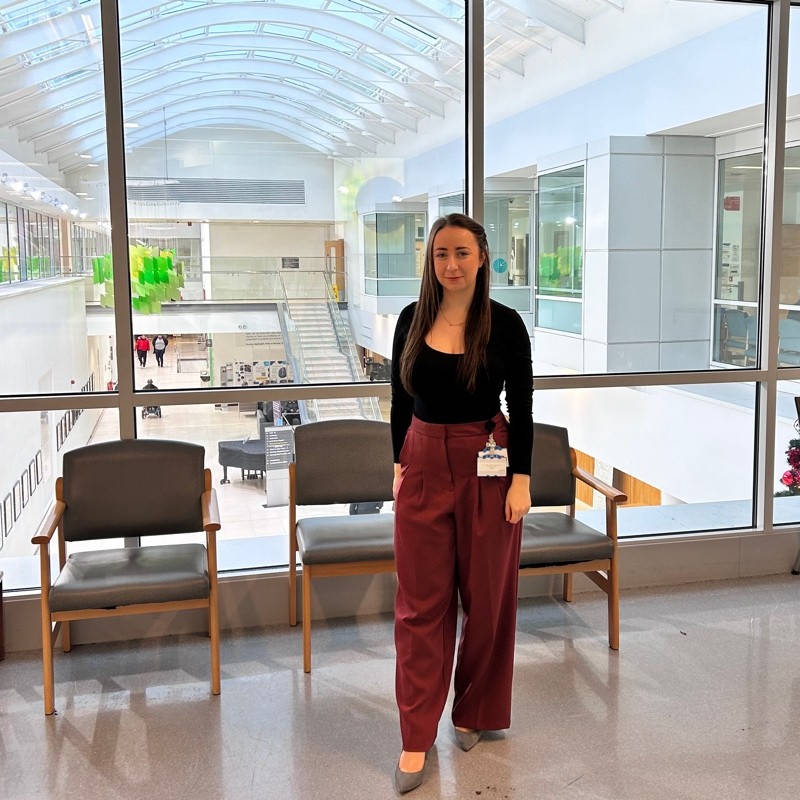
I am a radiotherapy physicist specialising in gynaecological brachytherapy, MRI based radiotherapy planning, and the use of artificial intelligence to support precision treatment. Originally from the North East, I followed an early interest in physics into medical physics, where I found a field that balanced technical challenge with meaningful impact on patient care. This mix of scientific problem solving and real world outcomes continues to motivate my work. I am currently undertaking an NIHR Doctoral Fellowship, developing more personalised and kinder radiotherapy for people with locally advanced cervical cancer. My research combines advanced MRI techniques, quantitative analysis, and AI driven planning to improve treatment accuracy and long term patient experience. Alongside my research, I am committed to clinical practice and to supporting others entering the profession. I am passionate about creating space for women in physics and healthcare research and enjoy mentoring trainees and early career scientists. I am driven by collaborative research that can be translated into meaningful improvements for patients and clinical teams.
Full Name: Anna Kristina Clark
Current Role: Radiotherapy Physicist
Organisation: Leeds Teaching Hospitals NHS Trust
Research Interest and/or Mentoring Expertise: Gynaecological brachytherapy; MRI-based radiotherapy planning; Artificial intelligence in image segmentation and radiotherapy planning; Translational and clinically integrated radiotherapy research
Academic Qualification: Pre Doc
Email: anna.clark11@nhs.net
Research Experience and Background
For the past eight years, I have worked in combined clinical and research roles within the NHS. I am currently completing an NIHR Doctoral Clinical and Practitioner Academic Fellowship (DCAF), due for completion in 2027. My research centres on developing radiotherapy approaches that reduce treatment-related toxicity for patients with locally advanced cervical cancer. My work spans advanced MRI acquisition, quantitative imaging analysis, radiobiological dose summation, and the integration of artificial intelligence to support treatment personalisation. I collaborate with several major international groups, including the EMBRACE study and the Reirradiation Cooperative Group (ReCOG). I also have experience in statistical modelling, prospective data collection, and designing clinically focused translational studies.
Clinical Experience
My clinical role is dedicated to planning and delivering gynaecological brachytherapy treatments, developing artificial intelligence techniques to improve radiotherapy planning, and maintaining complex treatment and imaging machines as part of a busy radiotherapy department. My main aspiration is to develop a team of healthcare researchers that focus on translating high quality research into clinical practice. I mentor and support the training of junior and trainee physicists and computer scientists.
What motivates you to become a mentor?
I am motivated to mentor because I have benefited greatly from supportive colleagues throughout my career, and I want to offer that same encouragement to others. Medical physics can feel difficult to navigate, especially for those who are new to research or from underrepresented backgrounds. I care deeply about helping people grow in confidence, develop their skills, and feel that they belong in the field. Supporting the next generation of scientists is one of the most rewarding parts of my work.